
How to Search Osceola County Traffic Court Records
Traffic cases in Osceola County are handled by the 77th District Court at 301 W. Upton Avenue in Reed City. The county does not run its own public traffic-ticket website. Instead, most cases are looked up through the traffic clerk or, where the court participates, through the statewide MiCOURT Case Search portal. MiCOURT may show civil, traffic, and criminal case history depending on the court selected. Traffic records sit inside the wider set of Osceola County court records, but they carry their own clerk and their own contact line.
The traffic division has its own staff member. Traffic Clerk Megan Morgan can be reached at (231) 832-6155 option 3 or by email at mmorgan@77districtcourt.org. Before you start, gather what you can from the ticket itself. The citation number is the fastest identifier, but a full legal name plus a date of birth also works. Having the violation date and the citing agency on hand helps the clerk pull the right file quickly.
- Locate your citation number, violation date, and the name of the court printed on the ticket.
- Check MiCOURT Case Search first, selecting the 77th District Court and entering a citation number or party name where the court participates.
- If the case is not visible online, contact Traffic Clerk Megan Morgan at (231) 832-6155 option 3 or mmorgan@77districtcourt.org.
- Confirm the charge, the court date, the disposition, and any balance owed.
- Pay, request a hearing, or ask how to obtain a certified copy of the record.
Which Courts Handle Traffic Cases in Osceola County
Nearly every Osceola County traffic ticket routes to the 77th District Court. Michigan district courts carry the limited-jurisdiction trial work, and residents have more contact with the district court than any other court in the state. Its magistrate may accept guilty pleas and impose a sentence for traffic, motor carrier, snowmobile, dog, Department of Natural Resources, and marine law violations. That magistrate authority is also why a missed traffic case can lead to a warrant issued from the district court rather than the circuit court.
A few serious matters move up the ladder. A drunk-driving charge or a traffic offense charged as a felony begins in the 77th District Court for arraignment and preliminary examination, then may bind over to the 49th Circuit Court. The table below shows where each layer of a traffic matter is handled.
| Court | Traffic Cases Handled | Address |
|---|---|---|
| 77th District Court | Civil infractions, misdemeanor traffic, motor carrier, snowmobile, marine and DNR violations, arraignments | 301 W. Upton Ave., Reed City, MI 49677 |
| 49th Circuit Court | Felony traffic matters after bindover from the district court | 301 W. Upton Ave., Reed City, MI 49677 |
| Michigan Secretary of State | License points, suspensions, and the driving record (not a court) | Statewide online and branch service |
Types of Osceola County Traffic Cases on Record
Traffic files in the county cover far more than speeding. The 77th District Court hears the full range of civil infractions and traffic misdemeanors, and its magistrate authority reaches offenses tied to Osceola's rural and outdoor setting. That breadth reflects a sheriff's department that patrols roads, snowmobiles, marine routes, and off-road vehicle trails.
- Moving violations - speeding, careless driving, failure to yield, and similar civil infractions that carry points.
- Non-moving and equipment offenses - registration, insurance, and equipment tickets that usually carry costs but no points.
- Misdemeanor traffic - driving on a suspended license and similar charges handled through arraignment and sentencing.
- Motor carrier and commercial - weight, load, and commercial vehicle violations reviewed by the court.
- Snowmobile, marine, ORV, and DNR - off-road and waterway violations the magistrate may accept pleas on.
What Osceola County Traffic Court Records Show
A traffic case file is built from the citation and every event that follows it. Under Michigan Court Rule 1.109, a court record includes the documents filed with the clerk plus the docket entries the court creates as the case moves along. For a traffic matter that means the ticket, the charge, each hearing, the plea or finding, and the money owed. The court file does not track your license points; that lives with the state, covered further down.
The register of actions is the running history a clerk or a MiCOURT result displays. The fields below are the ones a public traffic record typically shows.
| Field | What It Shows |
|---|---|
| Citation Number | The ticket identifier assigned by the citing agency and used to open the case. |
| Charge / Statute | The violation cited, such as speeding or careless driving, and the law it falls under. |
| Court Date | Any scheduled arraignment, informal hearing, or formal hearing date and time. |
| Disposition | The outcome: responsible, not responsible, guilty, dismissed, or reduced. |
| Fine and Costs | The amount assessed by the court, plus any balance still due. |
| Case Status | Open, closed, in warrant, or on a payment plan. |
Note: Michigan Court Rule 1.109 protects a date of birth, Social Security number, driver license number, and financial account numbers from public display in filed documents.
Searching Osceola Traffic Records by Number or Name
Two search paths reach the same file. A citation number points straight at one case and avoids mix-ups, so it is the better choice whenever the ticket is in front of you. A name search works when the ticket is lost, but common names return several matches, which is why a date of birth is so useful for narrowing the list. Keep sensitive numbers off email unless the court asks for them.
| Search Field | Type | Required | Notes / Format |
|---|---|---|---|
| Citation / ticket number | Text | Recommended | Best identifier for the traffic clerk. |
| Defendant name | Text | Yes if no ticket number | Provide the full legal name. |
| Date or year of birth | Date/Year | Recommended | Separates same-name records. |
| Driver license number | Sensitive ID | Only if clerk requests | Protected data; do not email unless instructed. |
| Violation date | Date | Optional | Helps the clerk locate the ticket. |
| Agency or officer | Text | Optional | Useful when the citation came from the sheriff, state police, or a city. |
Paying or Contesting an Osceola County Traffic Ticket
How you handle a ticket depends on whether you agree with it. Paying the fine on a civil infraction admits responsibility and closes the case, while contesting it sets up a hearing before a magistrate or judge. Osceola County sources did not publish a public ticket-fine schedule, so the current fine and cost amount should come straight from the traffic clerk rather than a guess. The district court also links a payment plan form for drivers who cannot pay in full at once.
Contesting a civil infraction means asking for an informal or formal hearing where the officer and the driver present their sides. A traffic misdemeanor follows the criminal process, with an arraignment and a plea of guilty, not guilty, or no contest. Missing a court date or a payment can trigger a bench warrant, added costs, or a license hold, since the magistrate may issue warrants and set or accept bond.
- Read the citation for the court name; most Osceola County tickets route to the 77th District Court unless a different court is printed.
- Contact Traffic Clerk Megan Morgan at (231) 832-6155 option 3 or mmorgan@77districtcourt.org.
- Ask for the fine and cost amount, the due date, whether an appearance is mandatory, and whether a payment plan is available.
- To contest, ask how to enter a not-responsible or not-guilty plea and request an informal or formal hearing.
- Pay by the deadline or attend the scheduled hearing to avoid a bench warrant or license consequence.
- Order your Secretary of State driving record separately if you need to see points, since the court clerk cannot remove state points.
Public Access and Setting Aside Traffic Records
Most traffic case records are public and viewable through the clerk or MiCOURT. Court files are governed by Michigan Court Rules rather than the Freedom of Information Act, because the judiciary sits outside the FOIA definition of a public body. County administrative records follow FOIA, but a traffic case file does not. That distinction decides which door you knock on for a given record.
Key Statutes:
Michigan Court Rule 1.109 - defines court records, case captions, and the personal information kept out of public view.
Michigan Court Rule 8.119 - governs how trial courts keep and provide access to court records.
MCL 15.243 - lists Freedom of Information Act exemptions that can shield privacy or law-enforcement details.
Setting aside a traffic conviction is limited. Michigan's Clean Slate law under MCL 780.621 allows eligible convictions to be set aside, but many traffic offenses are excluded and licensing consequences at the state level can remain. Anyone weighing a set-aside should confirm eligibility with the sentencing court before filing.
Court Traffic Records vs State Driver Records
The single most useful thing to understand on this topic is that a traffic stop creates two different records. The court traffic record is the case file the 77th District Court keeps. The state driver record is the license history the Michigan Secretary of State maintains. They are not the same file, they live in different offices, and they are corrected in different ways.
The Secretary of State page explains how a driver record is purchased online, what it contains, and what it costs. You can review the process on the Michigan Secretary of State driving record page.
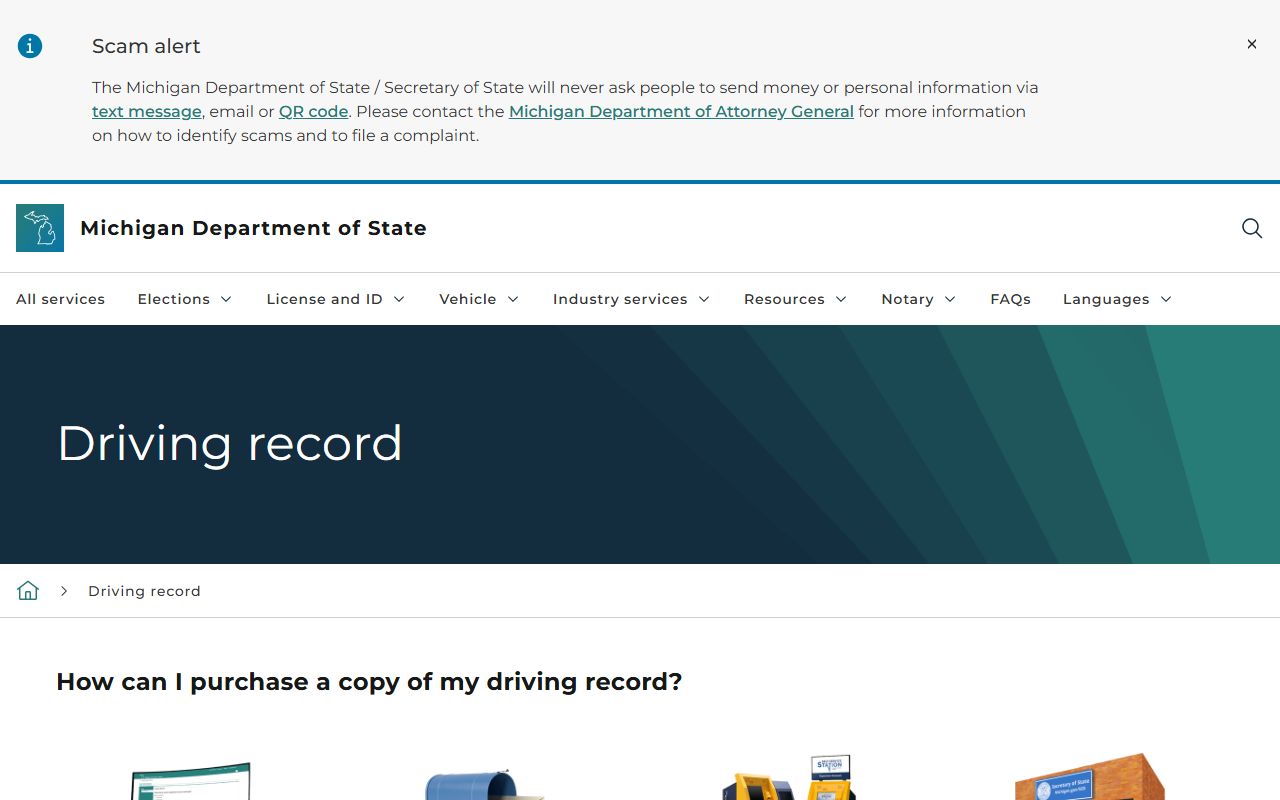
That driving record is where license points, suspensions, and conviction history appear, none of which the court clerk controls. The comparison below lays out the split so you request the right record from the right office.
| Feature | Court Traffic Record | State Driver Record |
|---|---|---|
| Held by | 77th District Court | Michigan Secretary of State |
| What it shows | Citation case, charge, hearing, plea, fine and costs, disposition | Convictions, points, license status, suspensions, driving history |
| How to access | Traffic clerk or MiCOURT where the case is online | Secretary of State driving-record service, online or at a branch |
| How to correct an error | Raise it with the court that entered the disposition | Work through the Secretary of State; the court cannot edit the state record |
Ordering the driver record uses the state's own service system. Drivers sign in through the Michigan Department of State e-Services portal to buy a copy.
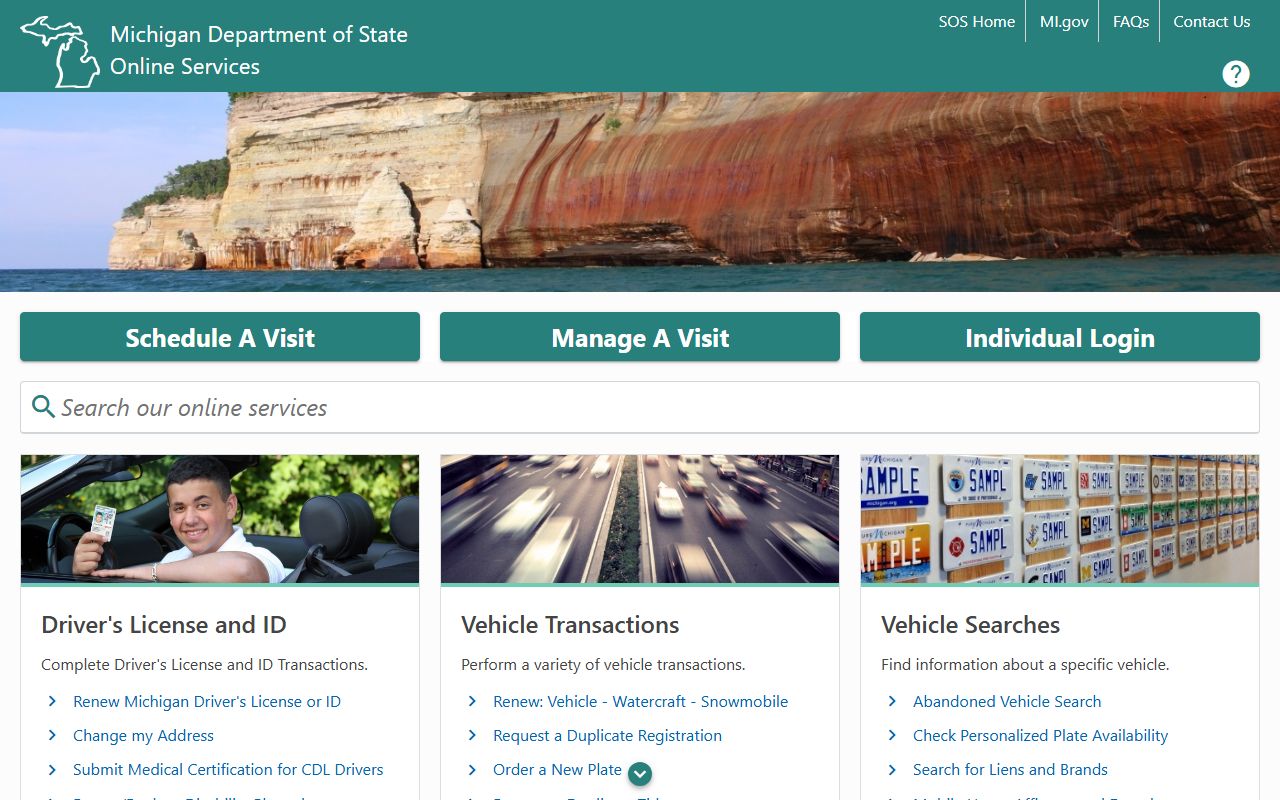
The e-Services portal requires a verified account and a payment before it releases the record, which is why it is a separate step from any court lookup.
CDL and Commercial Driver Records
Commercial drivers face tighter rules on traffic cases. A conviction that a regular driver might treat as routine can put a commercial driver license at risk, because federal reporting rules push serious and repeat violations onto the driving record. Motor carrier violations sit squarely within the 77th District Court's authority, and the magistrate may accept pleas and sentence on them.
The point that trips up many commercial drivers is masking. State and federal rules bar hiding a CDL holder's conviction through the kind of reduction a court might allow another driver. For that reason, a CDL holder should ask the traffic clerk exactly how a plea or reduction will report to the Secretary of State before agreeing to anything, and should order a driver record to confirm how a case landed.
Osceola County DUI and OWI Cases
Drunk-driving cases are not ordinary traffic tickets. In Michigan the charge is operating while intoxicated, and it is handled as a criminal matter rather than a civil infraction. An OWI begins in the 77th District Court for arraignment, and a felony-level charge can bind over to the 49th Circuit Court. Because these are criminal cases, they carry a full case file with pleas, bond, and sentencing.
For full Osceola County OWI and drunk-driving case detail, see the Osceola County criminal court records page.
Points and the Basic Driver Improvement Course
Points are assigned by the state, not the court, once a conviction is reported. Michigan attaches a set number of points to each type of violation, and those points sit on the driving record for a period of time where insurers and employers may see them. The court's fine and the state's points are two separate consequences of the same ticket.
Some drivers can keep points off the record through the Michigan Basic Driver Improvement Course. The Secretary of State explains eligibility and effect on the Basic Driver Improvement Course page.
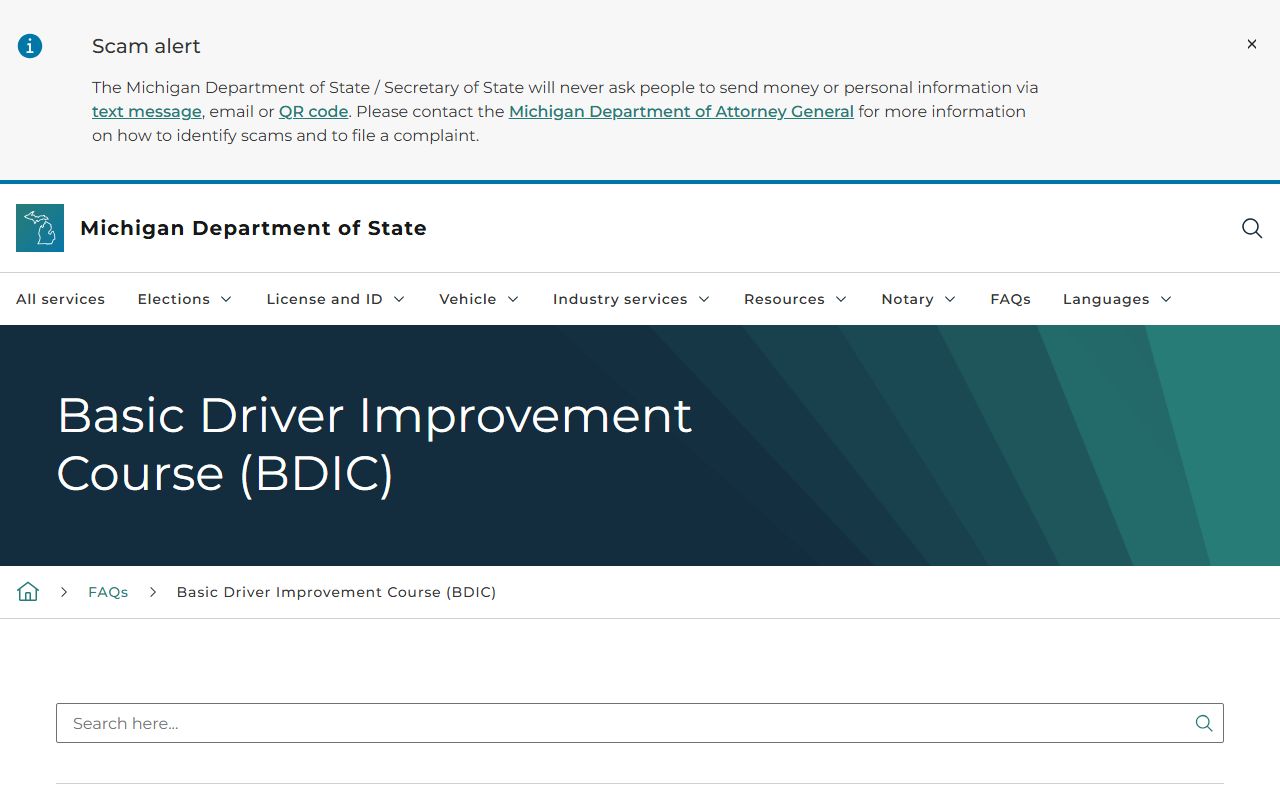
When a driver is eligible and completes the course, the state will not add the ticket's points to the driving record and will not show that ticket to insurers, though the information remains on the record for other purposes. Eligibility is decided by the state, so confirm it with the Secretary of State rather than assuming it applies.
MiFILE and Attorney Traffic E-Filing
The 77th District Court accepts electronic filing through the state MiFILE system. Since December 5, 2023, attorneys submitting civil filings are required to e-file under Michigan Court Rule 1.109, while self-represented parties may use MiFILE but are not required to. Traffic matters that involve attorney civil filings run through this same system.
The state's MiFILE court list confirms Osceola's district court and its e-filing contact. You can view it on the MiFILE available courts page.
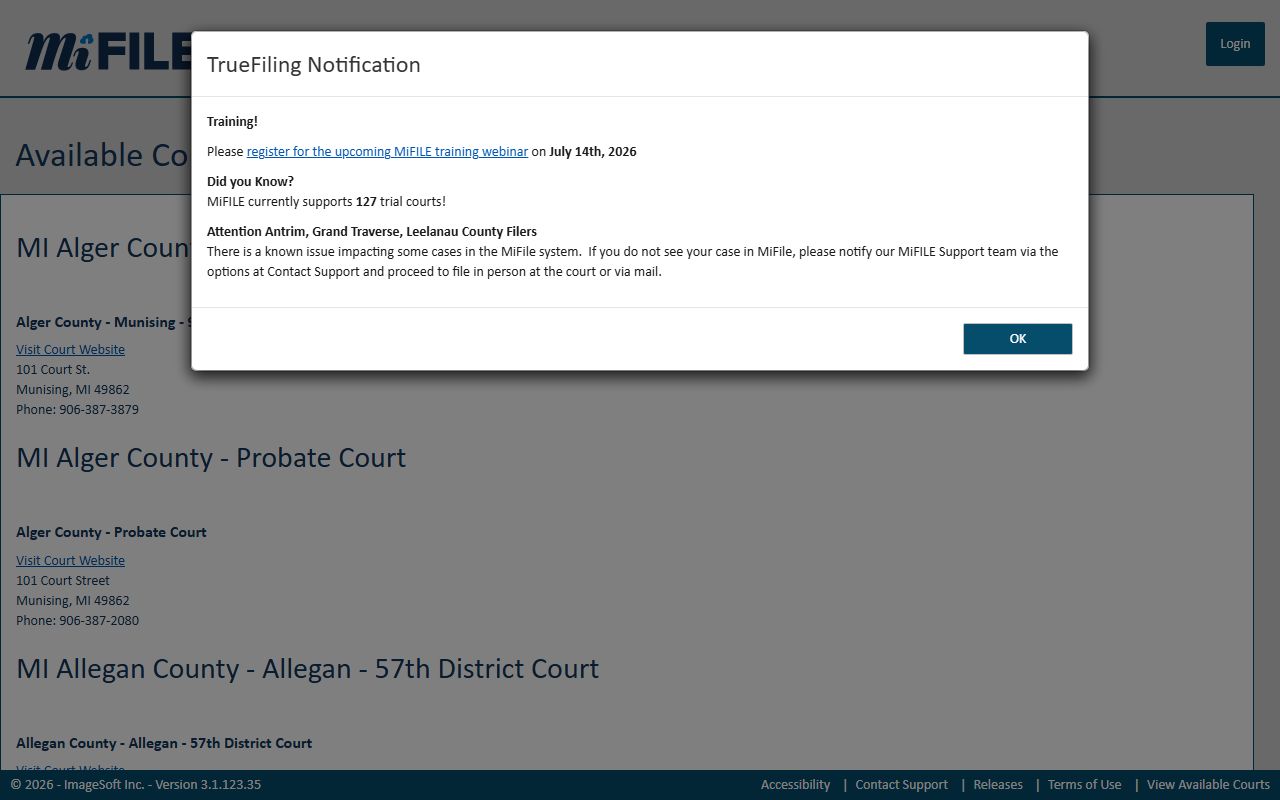
A MiFILE account is free to set up, and the court points users to a tutorial and quick-reference guide. Note: a signed-up MiFILE account is for filing documents with the court, not a public window for searching another person's traffic case.
Fees for Osceola County Traffic Copies
Copy costs split along the same court-versus-state line as the records themselves. Plain and certified copies of a court traffic file are priced by the county's court copy schedule, and the traffic clerk can confirm current amounts and accepted payment methods. A certified copy is the version courts and agencies accept as official, so ask for certification when a plain printout will not do.
A state driving record is purchased from the Secretary of State at a separate price. Drivers buy it online through the same e-Services portal used for other license transactions, with a copy and a certified copy priced differently.
| Item | Amount |
|---|---|
| Court copy, per page | $1 |
| Certified court copy | $10 plus $1 per page |
| Secretary of State driving record copy | $15 |
| Secretary of State certified driving record | $16 |
Note: Osceola County did not publish a public traffic fine schedule, so ask Traffic Clerk Megan Morgan for the current fine and cost on a specific ticket.