
Osceola County Arrest Records and Court Charges
An Osceola County arrest record is the account of an arrest itself. It names the person taken into custody, the agency that made the arrest, the date, and the booking details logged at the jail. The Osceola County Sheriff's Office handles that booking side. Sheriff Mark Cool's department processes people at the jail at 325 W. Upton Avenue in Reed City, reachable at (231) 832-2288. An arrest, by itself, is not a charge. Soon after an arrest the Prosecuting Attorney reviews the police reports and decides which charges to authorize. Anthony Badovinac, the Osceola County Prosecuting Attorney, files state felony and misdemeanor charges. Once those charges reach the court clerk, they become the formal charge record.
The arrest record and the court charge record travel on separate tracks. Booking data lives on the sheriff and jail side, so the jail roster and booking detail sit with the Osceola County inmate records. The charge record lives with the court. It shows each count the prosecutor filed, the statute behind it, and how that count changes as the case moves. Court charges after arrest are tracked through every hearing until a plea, verdict, or dismissal closes the matter. The full case file, with pleas, disposition, and sentence, sits on the Osceola County criminal court records page.
The Osceola County Sheriff's Department page describes how the office handles arrests, corrections, and court services.

Those booking records feed the arrest side of the file, while the charges themselves come from the prosecutor's charging document filed with the court.
How to Find Osceola County Arrest Records and Charges
Osceola County has no single county-run database that holds every arrest and charge in one place. Charges surface in a few official spots instead. Docket-level charge information for participating courts appears through MiCOURT Case Search, the statewide portal. For 49th Circuit Court felony and civil files, the County Clerk runs a paid name search at five dollars per name. Arrest and booking detail stays with the jail, so the inmate roster is the place to confirm custody status.
- Open MiCOURT Case Search and pick the participating Osceola County court, such as the 49th Circuit Court or the 77th District Court.
- Search by the defendant's name or by case number, adding a year of birth if the portal asks for it.
- Open the case and read the charge list, which shows each count filed against the defendant.
- Check each charge's statute code, severity level, and current status.
Statewide charge history is a different lookup. The Michigan State Police keeps a criminal history repository that the public can search through ICHAT. That record collects reportable charges and convictions from courts across the state, though it leaves out warrant information and suppressed records.
How Osceola County Charges Get Filed After Arrest
The charge record begins when the prosecutor files a charging document with the court. In Michigan two documents carry almost all criminal charges. A complaint is the sworn accusation that opens most cases. An information is the formal charging document used for a felony after the district court stage. A grand jury indictment is possible but rare in Michigan. Most felonies here proceed by complaint, then by information once the 77th District Court finishes the preliminary examination and binds the case over to circuit court.
Magistrates in the district court play a role even before charges are filed. They may issue arrest and search warrants that the Prosecuting Attorney authorizes. The table below shows how the three charging documents compare in Michigan practice.
| Complaint | Information | Indictment | |
|---|---|---|---|
| Filed By | Officer / Prosecutor | Prosecutor | Grand Jury |
| Common For | Most misdemeanors | Felonies after exam | Rare in Michigan |
| Role | Opens the case | Charges a felony for trial | Seldom used here |
Note: In Michigan a felony normally moves by complaint first, then by information after the preliminary exam, rather than by grand jury indictment.
Osceola County Charge Status Terms
Charges do not stay frozen once they are filed. As a case moves, a prosecutor may amend a count, reduce it through a plea, add a new count, or drop it. The court may dismiss a charge outright. Reading a charge record means watching each count's status, because two counts in the same case can end very differently.
| Status | What It Means |
|---|---|
| Filed | The prosecutor has formally charged the count and it is active in the case. |
| Amended | The charge was changed, for example to a different statute or count. |
| Reduced | The charge was lowered to a less serious offense, often through a plea. |
| Dismissed | The court dropped the charge and it no longer proceeds. |
| Nolle Prosequi | The prosecutor chose not to pursue the charge. |
| Bound Over | A felony charge moved from the 77th District Court up to the 49th Circuit Court after the preliminary exam. |
Charge vs. Conviction
Being charged is not the same as being convicted. A charge is an accusation that a prosecutor believes there is probable cause to file. A conviction comes only after a plea or a verdict proves guilt beyond a reasonable doubt. Both stages appear in the public court record, so a charge record may show counts that were later dismissed or reduced.
| Charge | Conviction | |
|---|---|---|
| Stage | Accusation | Verdict or plea |
| Burden of Proof | Probable cause | Beyond reasonable doubt |
| Public Record | Yes | Yes |
Sealed, Set-Aside, and Nonpublic Charges
Michigan does not use the word expungement in its statutes. The state calls it a set-aside. An eligible conviction can be set aside under MCL 780.621 and the Clean Slate program, which removes the record from ordinary public view. Some records are instead kept nonpublic under court rule while still existing in the file. The comparison below outlines how the two ideas differ.
| Sealed / Nonpublic | Set Aside (Expunged) | |
|---|---|---|
| Visibility | Hidden from public view | Treated as if it never occurred |
| Law Enforcement | Limited access | Very limited access |
| Eligibility | Certain records nonpublic under court rule | Set aside under MCL 780.621 and Clean Slate |
Osceola County Charge Codes and Severity
Every charge points back to a specific law. A charge code ties the accusation to the Michigan statute the person is accused of breaking, and the code also signals how serious the offense is. Michigan sorts offenses into felonies, misdemeanors, and civil infractions. Felonies carry the heaviest penalties and, in Osceola County, start in the 77th District Court before moving to the 49th Circuit Court. Misdemeanors punishable by up to one year stay in the district court through sentencing. Civil infractions, such as most traffic violations, are not crimes at all.
One arrest can produce several separate charges. A single incident may lead to a felony count, a companion misdemeanor, and a civil infraction, each with its own code and its own status. Reading a charge record means checking every count, not just the top one, because charges can be resolved differently within the same case.
Statewide Charge Lookups for Osceola County
Charges filed in Osceola County do not stay purely local. Reportable charges and convictions roll up into a statewide criminal history kept by the Michigan State Police. The public can search that history through ICHAT, the Internet Criminal History Access Tool. A name-based search returns Michigan criminal history for a fee, which is a common step for landlords, employers, and people checking their own record.
The Michigan State Police criminal history page explains the scope of an ICHAT search and its limits.
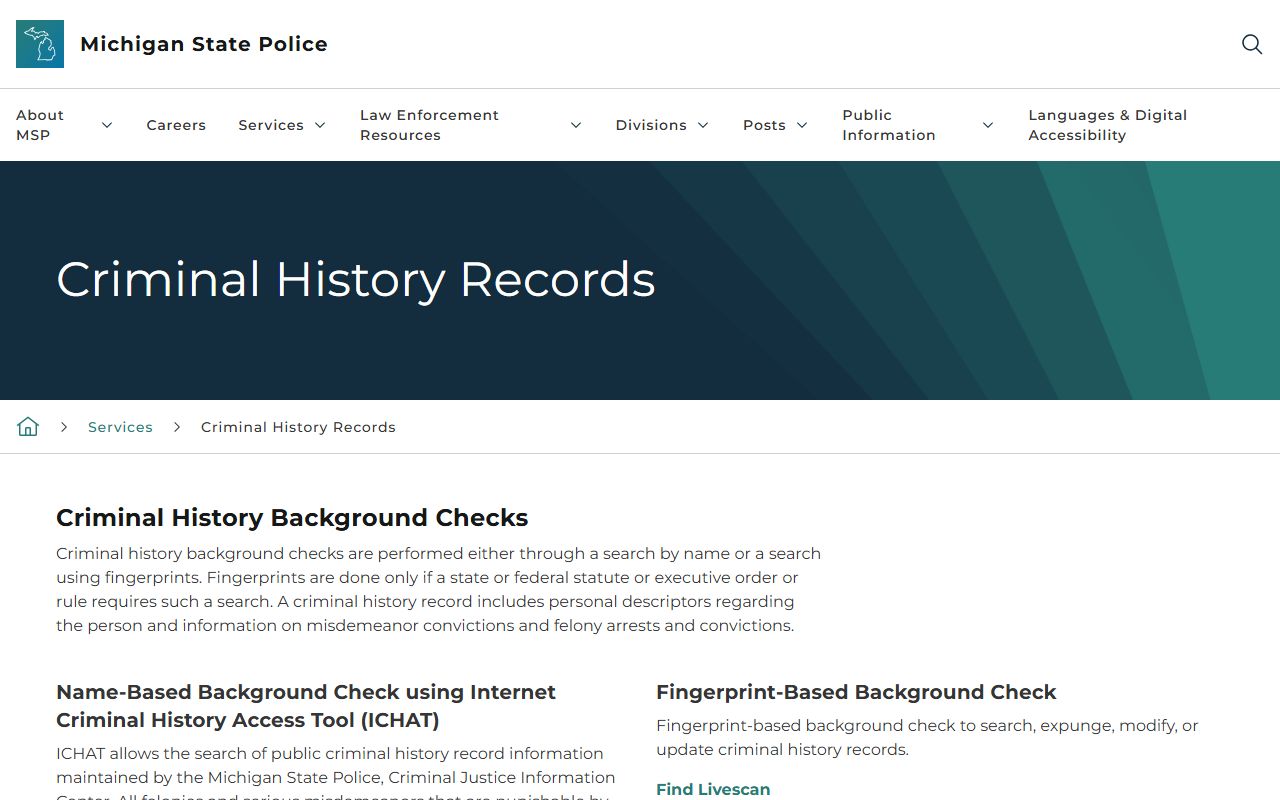
ICHAT is a helpful starting point, but it does not replace the actual court file for an Osceola County charge.
ICHAT has real limits. The Michigan State Police states that warrant information and suppressed records are not available through the tool, so it is not a warrant search. For a local circuit file, the County Clerk still runs a paid name search of 49th Circuit Court criminal and civil records at five dollars per name. Certified court copies cost ten dollars plus one dollar per page.
Background Check Considerations
There is a difference between a casual name lookup and a background check run for a hiring or housing decision. Formal background checks are governed by the federal Fair Credit Reporting Act, which sets rules on accuracy, notice, and the applicant's right to dispute. A quick search of a court docket or ICHAT is not the same as an FCRA-compliant report, and it should not be treated as one.
Important: This site is not a consumer reporting agency under the FCRA, and its information may not be used for employment, tenant, credit, or insurance screening.
Restricted Charge Records in Osceola County
Not every charge record is open to the public. Juvenile charges handled by the Probate and Family Court are confidential, and under MCL 712A.28 those records open only by court order. Charges that end in a set-aside under Michigan's Clean Slate law leave ordinary public view, though courts and law enforcement may keep limited access. Dismissed counts and records tied to an open investigation may also be withheld.
The Michigan Sex Offender Registry is a separate state system, not a court charge file.
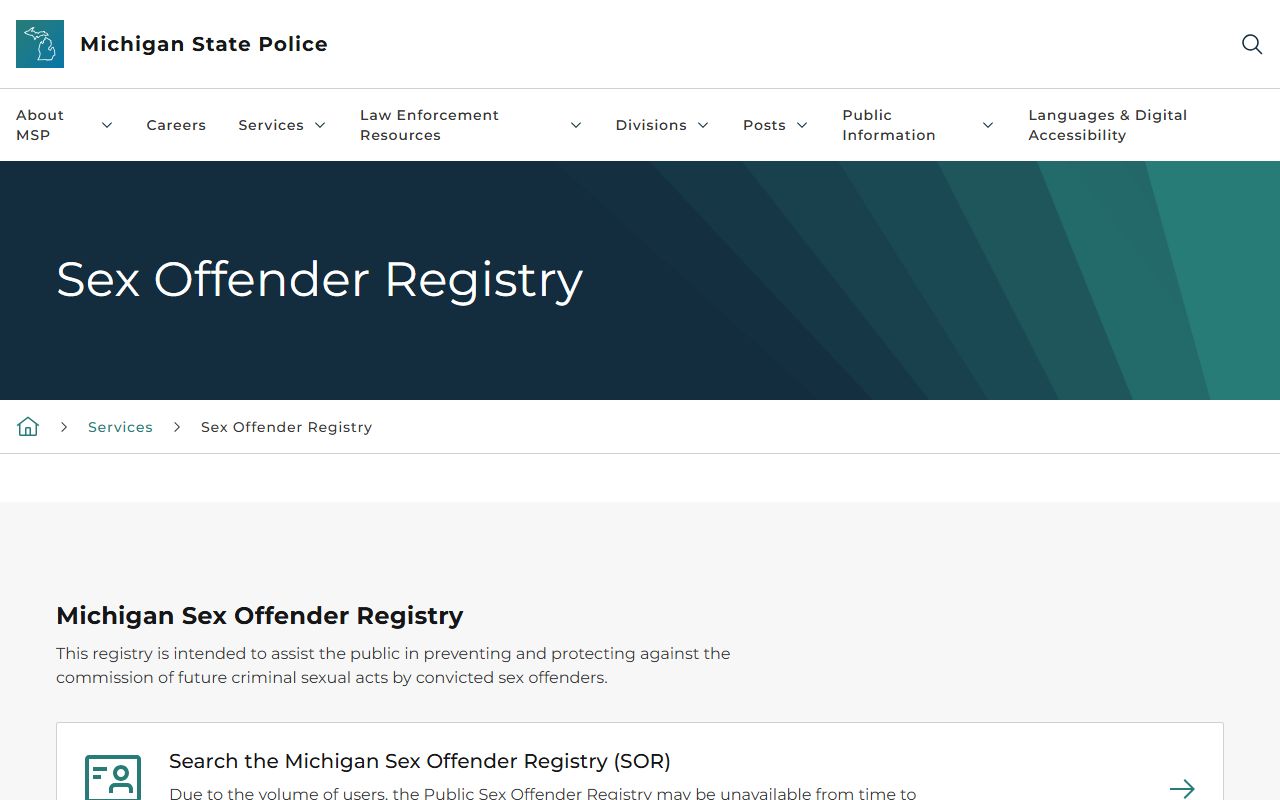
The registry lists offenders by name and location, but a court charge record still comes from the district or circuit court file.
Personal identifying information stays protected even in public files. Michigan Court Rule MCR 1.109 shields dates of birth, Social Security numbers, driver's license numbers, and financial account numbers, so those details are redacted from documents open to the public.
Note: A dismissed or set-aside charge can still appear in older printouts, so confirm current status with the court that entered the charge before relying on it.