
What Probate Covers in Osceola County
Probate is the branch of the trial courts that settles what a person leaves behind and protects those who cannot fully protect themselves. In Osceola County, probate records cover deceased estates, wills deposited for safekeeping, trust registration, and the opening of a safe deposit box after a death. The same court oversees guardianships, conservatorships, and protective proceedings for minors and incapacitated adults. It also handles name changes, emancipations, and involuntary mental health commitments. Youth cases such as neglect, abuse, delinquency, and juvenile probation belong here too, along with adoptions.
Osceola County probate cases are heard by the Probate and Family Court, part of the 18th Probate District Court that is shared with Mecosta County. Judge Tyler Thompson presides. The court sits inside the Osceola County Main Courthouse in Reed City. Two registers divide the daily work. A Probate Register manages estates, guardianships, and conservatorships, while a Juvenile Register handles youth matters. No single county website lists these case files, so a search starts with the court staff who keep each record. Divorce and custody filings run through the circuit court instead, and those show up in the county marriage and divorce records.
The county profiles the bench, the registers, and the case categories on the official Osceola County Probate and Family Court page.
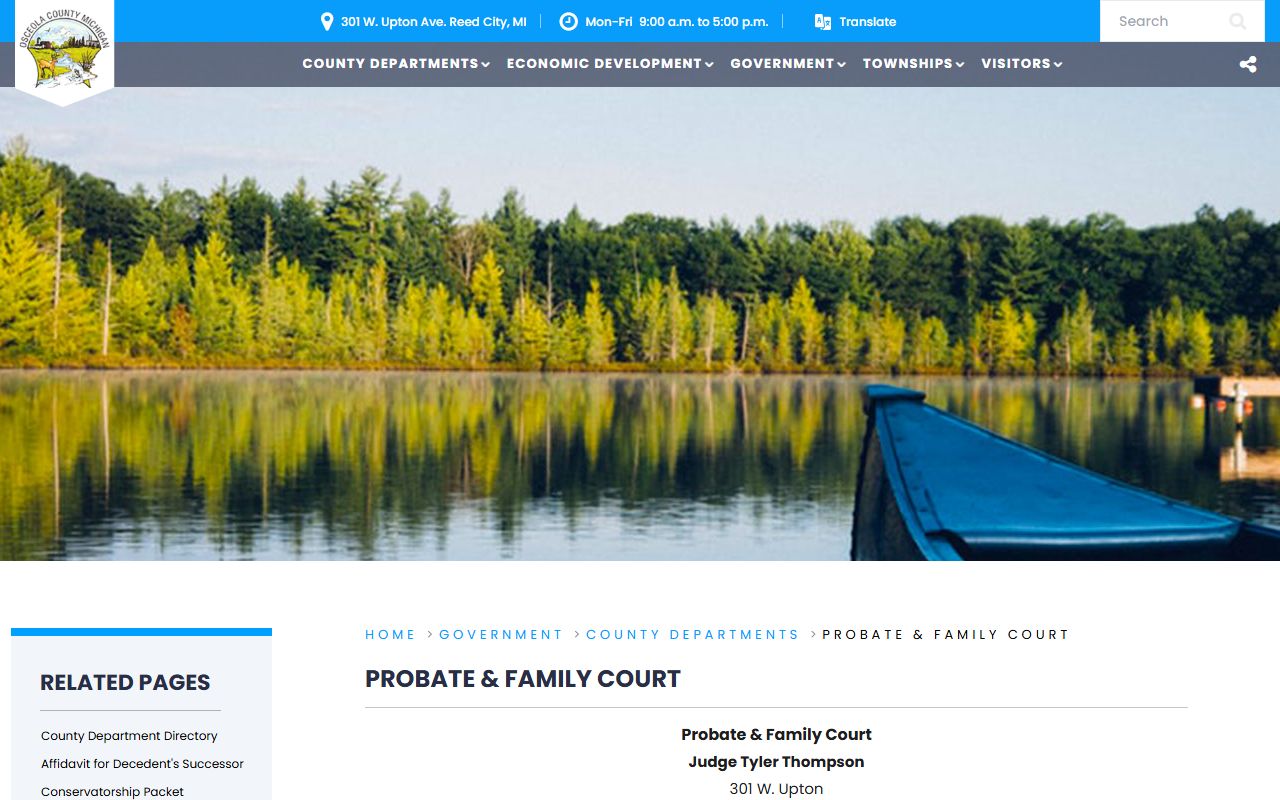
That page confirms Judge Thompson, both registers, and the state form link that Osceola County probate filers rely on.
Probate Terms Defined
Probate paperwork uses words that rarely come up in daily life. A short glossary helps readers make sense of an estate file, a guardianship petition, or a set of letters issued by the court. The terms below appear again and again in Osceola County probate records.
- Testator
- The person who made a will. When that person dies, the will is offered to the probate court for review.
- Executor
- The person named in a will to carry out its terms. Michigan filings often use the broader label personal representative for this role.
- Intestate
- Dying without a valid will. State law then decides who inherits and in what shares.
- Guardianship
- A case that appoints someone to make personal and care decisions for a minor or an incapacitated adult.
- Conservatorship
- A protective proceeding that appoints someone to manage another person's money and property.
How to Search Osceola County Probate Records
Osceola County does not publish a stand alone online probate search portal. The practical first step is to contact the correct register at the Probate and Family Court. The Probate Register answers estate, guardianship, and conservatorship questions. The Juvenile Register answers questions about youth cases, and many of those records are limited by law. Court staff can confirm whether a file exists, what it holds, and how to obtain copies.
Some Michigan probate cases surface through the statewide MiCOURT Case Search. That system may include civil, traffic, criminal, domestic, and probate cases depending on the court that participates. Probate coverage for Osceola County was not confirmed in this research, so treat MiCOURT as a supplement rather than a guarantee. When a case is not visible online, the register stays the reliable channel.
The fields below reflect the information the court or a MiCOURT screen may use to locate a probate file.
| Field Label | Type | Required | Notes |
|---|---|---|---|
| Case number | Clerk request or MiCOURT field | Optional if known | Michigan case numbers use a year prefix and a case-type suffix. |
| Decedent, ward, or protected person name | Clerk request | Yes for a name search | Use the full legal name plus a date of birth or death if known. |
| Case type | Request description | Recommended | Estate, guardianship, conservatorship, trust, name change, will safekeeping, adoption, or juvenile. |
| Filing year or date | Request description | Optional | Narrows a search when common names appear. |
| Relationship or access basis | Request description | Sometimes required | Needed for limited files such as adoption, juvenile, or mental health. |
To open a new matter or check an existing one, walk through these steps.
- Decide the case type. Estate, will, and trust matters go to the Probate Register, while youth cases go to the Juvenile Register.
- Download the correct state form from the Michigan Courts probate forms library before you file or request records.
- File in person at 301 W. Upton with the Probate and Family Court, or call the register to confirm mail and copy procedures.
The official Michigan probate court forms index lists the SCAO-approved documents used across the state.
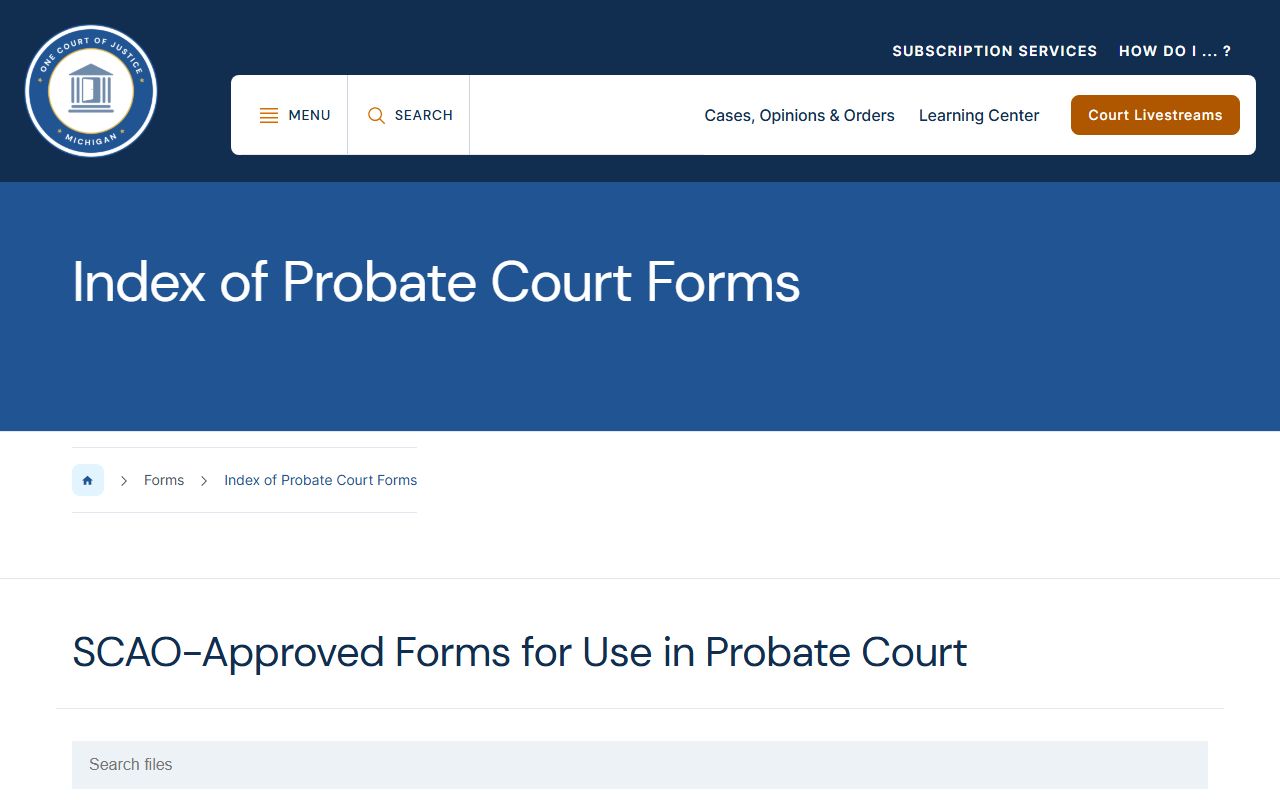
Those forms cover petitions, acceptances of appointment, inventories, accounts, and closing papers used in Osceola County probate cases.
The Osceola County Probate and Family Court
One court handles all probate work in the county. The Probate and Family Court operates as part of the 18th Probate District Court and serves both Osceola and Mecosta Counties from Reed City. Requests split between two registers, so reaching the right person saves time. Use the Probate Register for estates, guardianships, and conservatorships. Use the Juvenile Register for neglect, abuse, delinquency, and juvenile probation matters.
Probate and Family Court, Probate Register
Katrina Small, Probate Register
301 W. Upton
Reed City, MI 49677
(231) 832-6124
Fax (231) 832-6181
ksmall@18thprobatecourt.org
Probate and Family Court, Juvenile Register
Stephanie Vickers, Juvenile Register
301 W. Upton
Reed City, MI 49677
(231) 832-6127
Fax (231) 832-6181
svickers@18thprobatecourt.org
Note: The Probate and Family Court address at 301 W. Upton in Reed City took effect December 14, 2022, so confirm the current location before mailing filings.
Estate Fees and Small Estates
Probate filing fees in Michigan follow statewide schedules tied to the type of petition and, for estates, the value of the property involved. Official Osceola County sources do not publish a separate probate fee list. Contact the Probate Register at (231) 832-6124 for the current filing fee that applies to your petition before you submit paperwork or a payment.
Smaller estates may qualify for a simplified route. Under MCL 700.3982, a small estate can pass through an assignment procedure instead of a full administration when the value falls within the statutory limit. Michigan Legal Help reported a 2026 small estate threshold near $53,000 for a person who died in 2026, a figure worth confirming against the current statute before you rely on it. The exact amount changes over time, so verify the number in force for the year of death.
The small estate rule lives in the Michigan Compiled Laws at MCL 700.3982 small estate assignment.
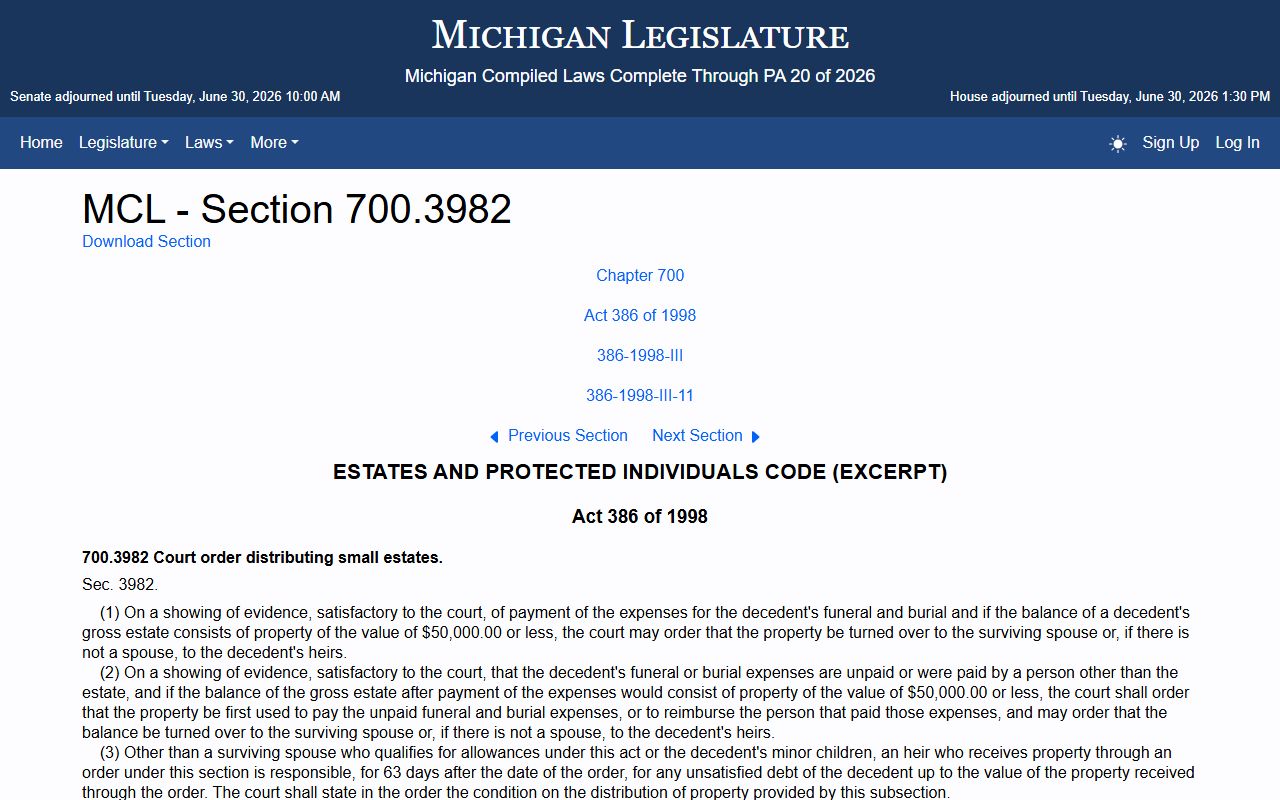
That statute is the reference point when heirs weigh a simplified small estate against a standard Osceola County probate case.
Certified copies of court records are a separate cost from a filing fee. The County Clerk provides certified court copies for records it holds, and the published rate sets expectations for what a certified probate document may run once located. A closer look at those copy services appears on the county clerk of court page.
| Item | Cost |
|---|---|
| Certified court copy | $10 plus $1 per page |
| Additional plain copies | $1 per page |
| Probate filing fees | Set by statute and case type; contact the court |
What Osceola County Probate Records Show
A probate file grows as a case moves forward. An estate record generally starts with a petition or application that names the decedent and asks the court to appoint a fiduciary. The court then issues letters that give a personal representative, guardian, or conservator authority to act. Later filings track the inventory of assets, the accounts of money coming in and going out, and the orders that direct how property is handled and distributed.
Common documents and data points found in an Osceola County probate record include the following.
- Petition or application type and the case number with its year prefix.
- Decedent, ward, or protected individual named in the matter.
- Personal representative, guardian, or conservator appointed by the court.
- Letters of authority, bonds, and acceptances of appointment.
- Inventory of estate assets and periodic accounts.
- Orders, notices to interested persons, and closing papers.
Note: Personal identifying details such as birth dates and account numbers are protected under Michigan Court Rule 1.109 and are redacted or withheld from public probate documents.
Restricted Osceola County Probate Records
Not every probate file is open to the public. The Probate and Family Court carries several categories that Michigan law shields from ordinary inspection. Juvenile cases and adoptions sit at the top of that protected list, and mental health commitments carry their own limits. When a file may be restricted, ask the Juvenile Register whether you qualify for access rather than assuming a record is public.
Juvenile delinquency, neglect, and abuse records are held by the court and opened only by court order.
The controlling juvenile rule appears at MCL 712A.28 juvenile court records.
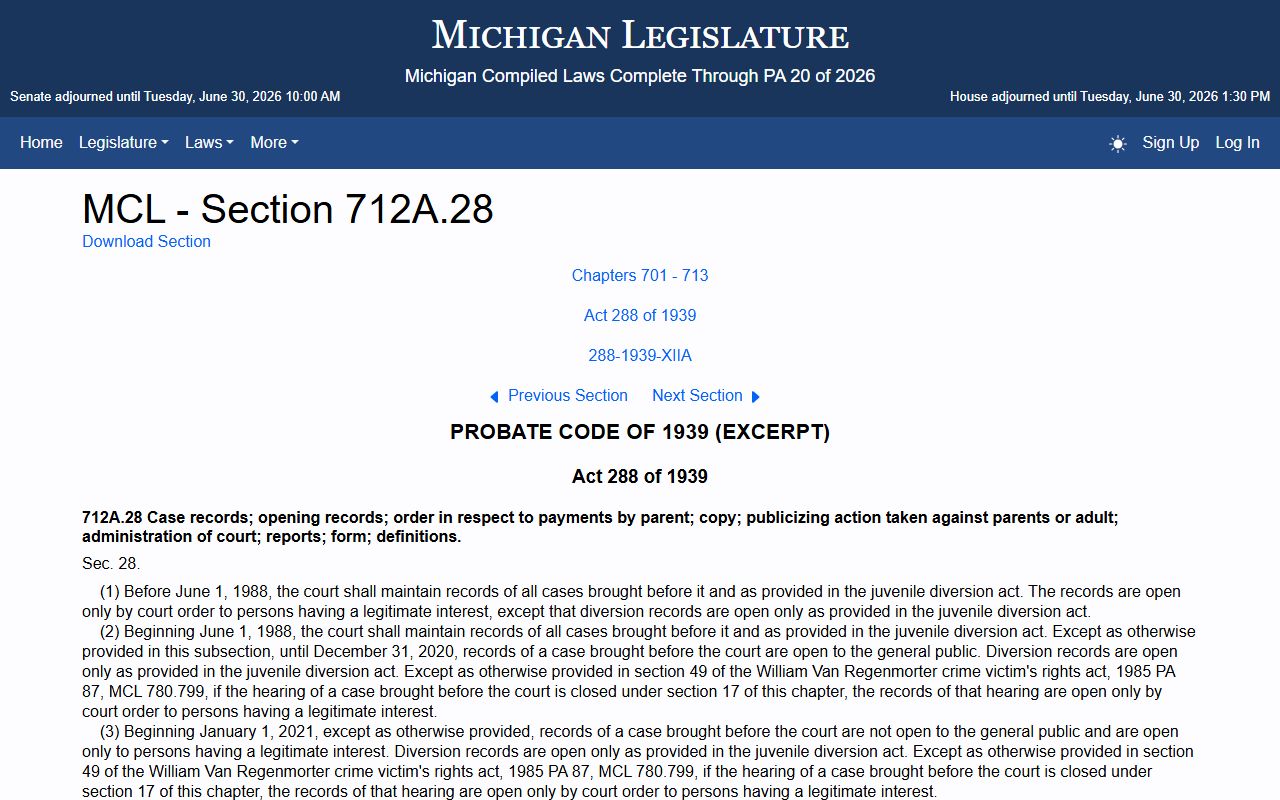
That statute is why a routine name search will not return an Osceola County juvenile file without the court's permission.
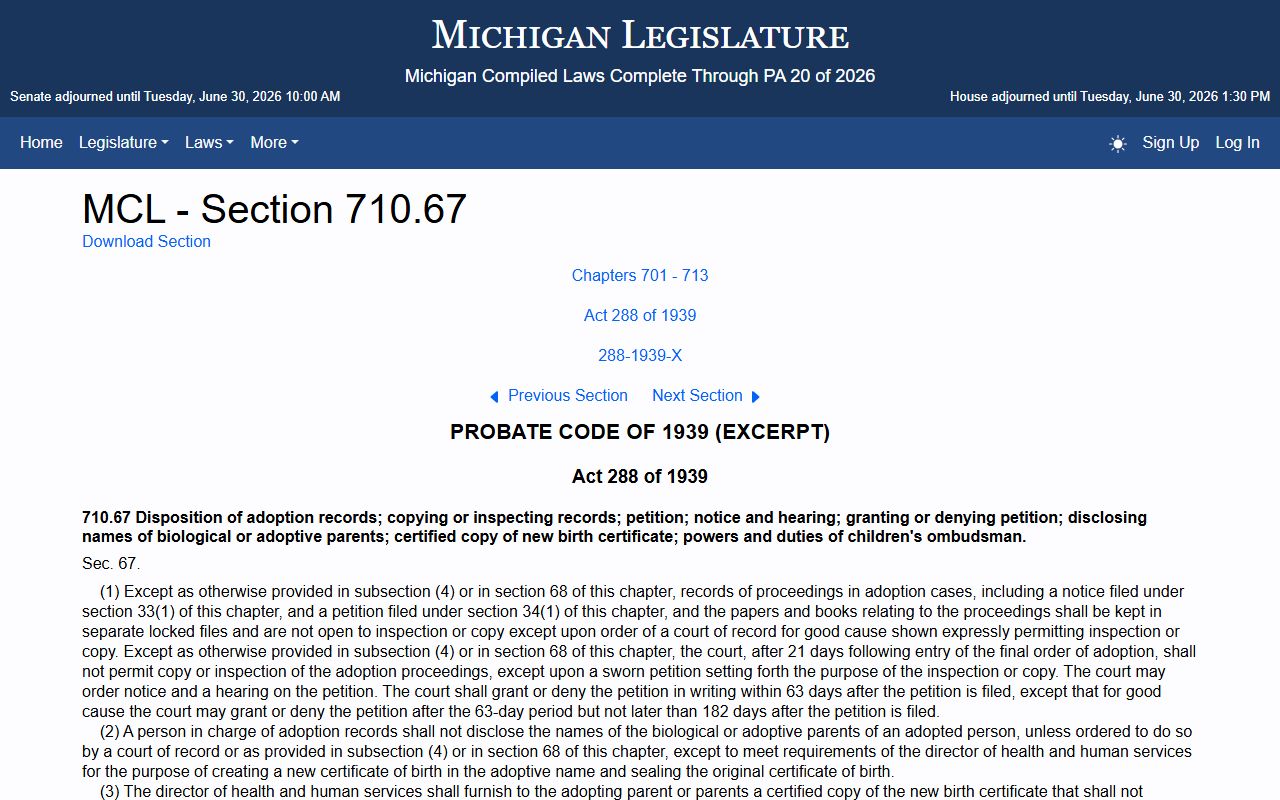
Adoption records are also closed after an adoption order enters. Access is limited to people who meet statutory conditions or who obtain a court order. Parties who need adoption information should ask the court about the eligibility and petition steps involved.
The adoption limits are set out at MCL 710.67 adoption record limits.
Alongside adoption, mental commitment records are treated as nonpublic or limited under the Michigan Courts access rules, so confirm before requesting them.
Sealed and protected probate matters, including juvenile, adoption, and mental health files, cannot be viewed simply because a case number is known. Access depends on your relationship to the case or a court order.