
The Osceola County Circuit Court Explained
The Osceola County Circuit Court is the 49th Circuit Court, a general jurisdiction trial court that Osceola shares with neighboring Mecosta County. It sits inside the main courthouse in Reed City, and the circuit courtroom is on the second floor. This is the court that handles the most serious cases filed in the county. Felony criminal matters reach it after a bindover from the district court. Large civil disputes, divorce, family filings, and personal protection orders are heard here too.
Two judges preside over the 49th Circuit Court, Kimberly L. Booher and Amy Clapp. The court accepts custody and support filings, collects motion fees, and processes criminal and civil record searches through the county clerk. Because the circuit is shared, some administrative work crosses county lines. Osceola County filings are still handled at the Reed City courthouse. The 49th Circuit Court office also hears appeals that come up from the lower courts in the county.
301 W. Upton Avenue, 2nd Floor
Reed City, MI 49677
Phone: (231) 832-3261 Ext. #2
Fax: (231) 832-6149
Osceola County Courts at a Glance
Three trial courts serve Osceola County residents, and each one holds a distinct set of cases. The circuit court is the top trial court, the 77th District Court is the limited jurisdiction court, and the Probate & Family Court manages estates and juvenile work. All three share the same Reed City address but keep separate phone lines and clerks. The table below lists the judge, location, and main duties for each court.
| Court / Office | Judge | Address | Phone | Jurisdiction |
|---|---|---|---|---|
| 49th Circuit Court | Kimberly L. Booher; Amy Clapp | 301 W. Upton, Reed City, MI 49677 | (231) 832-3261 Ext. #2 | Felony criminal after bindover, civil claims over $25,000, divorce and family, PPOs, custody and support filings, appeals from lower courts |
| 77th District Court | Peter Jaklevic; Magistrate Thea Titus | 301 W. Upton, Reed City, MI 49677 | (231) 832-6155 | Misdemeanors up to one year, felony arraignment and preliminary exams, traffic, small claims up to $7,000, civil up to $25,000, landlord-tenant |
| Probate & Family Court (18th Probate District) | Tyler Thompson | 301 W. Upton, Reed City, MI 49677 | (231) 832-6124 | Estates, guardianships, protective proceedings, mental commitments, adoptions, juvenile neglect, abuse, and delinquency |
Note: Every court above shares the Reed City courthouse, so confirm the correct division and phone option before you visit or call about a case.
What the Osceola County Circuit Court Handles
The 49th Circuit Court is where the county's high-stakes cases land. Felony charges start in the district court for arraignment and a preliminary examination. If a felony is bound over, the case moves up to the circuit court for trial and sentencing. On the civil side, the circuit court takes disputes where the amount in question tops $25,000. Family matters make up a large share of its work as well.
The court's docket covers several distinct case categories:
- Felony criminal cases after a district court bindover
- Civil claims that exceed $25,000
- Divorce, both with children and without children
- Custody, parenting time, and child support filings
- Personal protection orders
- Appeals from the district and probate courts
New case filings for divorce and for civil claims over $25,000 go through the county clerk, who also collects motion fees and runs record searches for the circuit court. The Friend of the Court supports the family division with custody, parenting time, support recommendations, and enforcement. Circuit court dockets, where the case participates, may also appear in the state MiCOURT Case Search system for public docket checks.
Circuit Court vs District Court vs Probate & Family Court
Osceola County splits its trial work across three courts, and the differences matter when you look for a record or file a case. The circuit court is the general jurisdiction court for the biggest matters. The 77th District Court is the limited jurisdiction court for smaller civil claims, misdemeanors, and traffic. The Probate & Family Court handles estates and most juvenile cases. The comparison below shows how the three courts divide the caseload.
| 49th Circuit Court | 77th District Court | Probate & Family Court | |
|---|---|---|---|
| Civil Limit | Over $25,000 | Up to $25,000 | Estate and trust value |
| Criminal Jurisdiction | Felonies after bindover | Misdemeanors up to 1 year, felony arraignment and exam | Juvenile delinquency |
| Family Cases | Divorce, custody, support, PPOs | None | Adoptions, guardianships, juvenile |
| Small Claims | No | Yes, up to $7,000 | No |
A small-claims case in the district court asks parties to waive a jury, the rules of evidence, lawyer representation, and the right to appeal the judge's decision. If a party objects, the matter shifts to the general civil division instead. Estates, wills for safekeeping, and mental commitments sit only with the Probate & Family Court.
How Osceola County Cases Move Through the Courts
Cases in Osceola County follow a clear path from the trial level up to the state's highest court. A criminal matter usually opens in the 77th District Court, where a defendant is arraigned and a felony gets a preliminary examination. Felonies bound over move to the 49th Circuit Court for trial and sentencing. A party who loses at the circuit level can seek review at the appellate level. The flow below shows the standard route.
Case path: 77th District Court › 49th Circuit Court › Michigan Court of Appeals › Michigan Supreme Court
The Michigan trial court overview confirms that circuit, district, and probate courts form the trial level of the state system. Above them, the Michigan Court of Appeals reviews trial court decisions, and the Michigan Supreme Court sits at the top. Civil disputes over $25,000 and divorce cases begin directly in the circuit court, then follow the same appeal path if a party challenges the outcome.
Filing Osceola County Circuit Court Cases Through the County Clerk
The County Clerk is the filing and records counter for the 49th Circuit Court. New divorce cases and civil claims over $25,000 are filed there, and the clerk also accepts custody and support motions. The office collects motion fees and performs criminal and civil record searches for circuit cases. There is no free county-wide online court-record database, so the clerk's paid name search is the main local channel for circuit files.
The clerk charges $5 for each name searched, and $1 per page if a Register of Actions copy is needed. Certified court copies cost $10 plus $1 per page. To run a search, contact the clerk, give the name and any known details like date of birth or filing year, and note whether the case is criminal or civil. The clerk's criminal and civil name-search notice spells out the fees. For a full picture of the office and its duties, the Osceola County County Clerk page covers hours, forms, and ordering options, and the general court records page walks through statewide search tools.
Magistrate Powers in Osceola County District Court
Many warrants and traffic pleas in the county start with a district court magistrate rather than a circuit judge. In the 77th District Court, the magistrate carries specific authority set by state law. This is why a bench or arrest warrant can originate below the circuit level. The magistrate's role keeps routine matters moving without a judge for every step.
A district court magistrate in Osceola County may:
- Set bail and accept bond in criminal matters
- Accept guilty pleas and sentence for traffic, motor carrier, snowmobile, dog, DNR, and marine law violations
- Issue arrest and search warrants authorized by the prosecutor or municipal attorney
Attorney magistrates may also hear small claims. When a felony is charged, the district court handles the arraignment, bail, and preliminary examination first, then the circuit court takes the case if it is bound over. The 77th District Court lists the criminal, civil, and traffic clerk options for reaching the right division.
Osceola County Land Records and Deeds
Land records are a common reason people confuse offices, but they are not court records. The circuit court and the county clerk do not hold deeds. Real-property documents live with the Register of Deeds, a separate office on the first floor of the courthouse. That office maintains recorded deeds, mortgages, and liens for property in Osceola County.
The county offers a free public land-record search, and you can start at the Register of Deeds land search disclaimer screen before you continue.
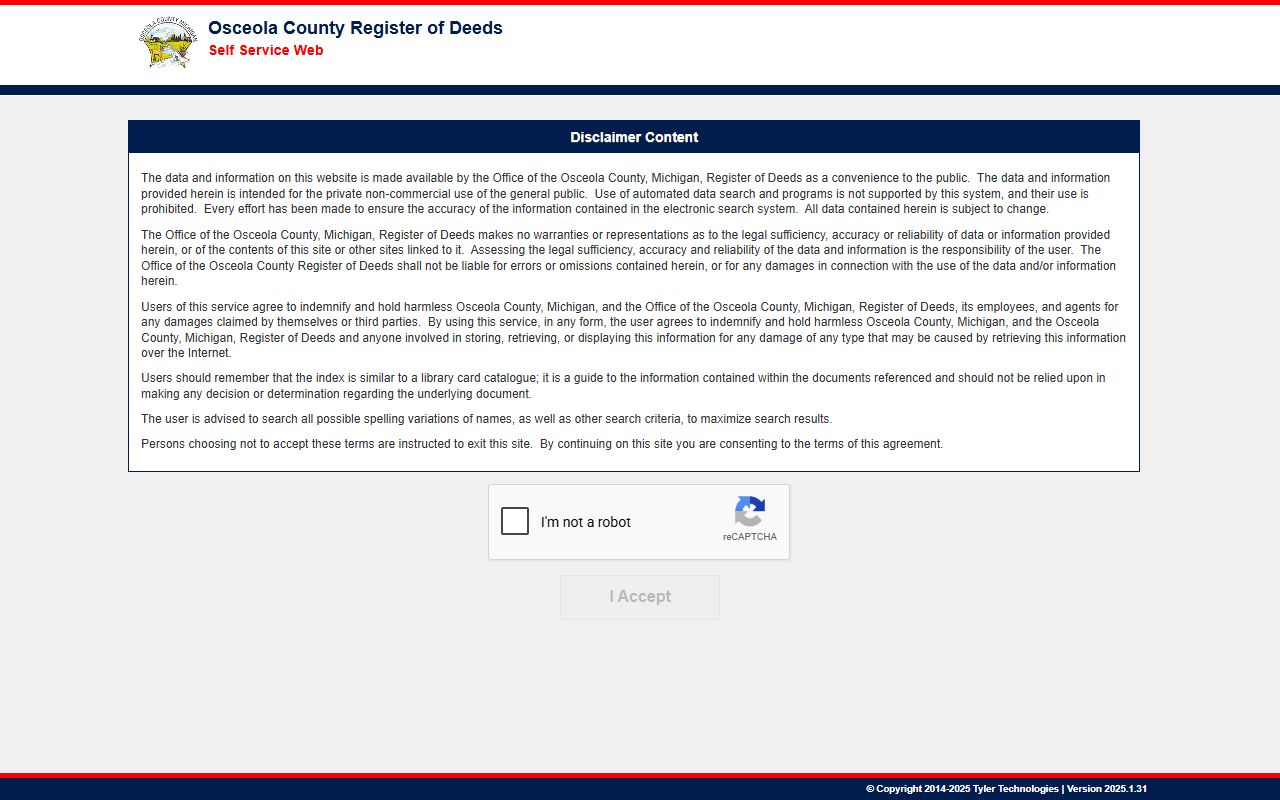
The Tyler-hosted portal indexes land records online from 1988 to the present, with documents dating back to 1853. It reminds users to try every spelling variation of a name and treats the index like a library catalogue rather than legal proof. When a circuit case touches a property lien or a judgment against real estate, the land index and the court file work together, but each is requested from its own office.
Marriage and Family Matters in Circuit Court
The 49th Circuit Court's family division handles divorce, custody, parenting time, and child support. Divorce filings and their fees run through the county clerk, with $255 for a divorce with children and $175 for a divorce without children. State law requires a party to have lived in Michigan for 180 days and in the county for 10 days before filing, unless an exception applies. Marriage licenses, by contrast, are issued by the clerk, not the circuit court.
Who may perform a marriage in Michigan is set by statute, and you can read the list of authorized officials in MCL 551.7, which covers judges and recognized religious officials.
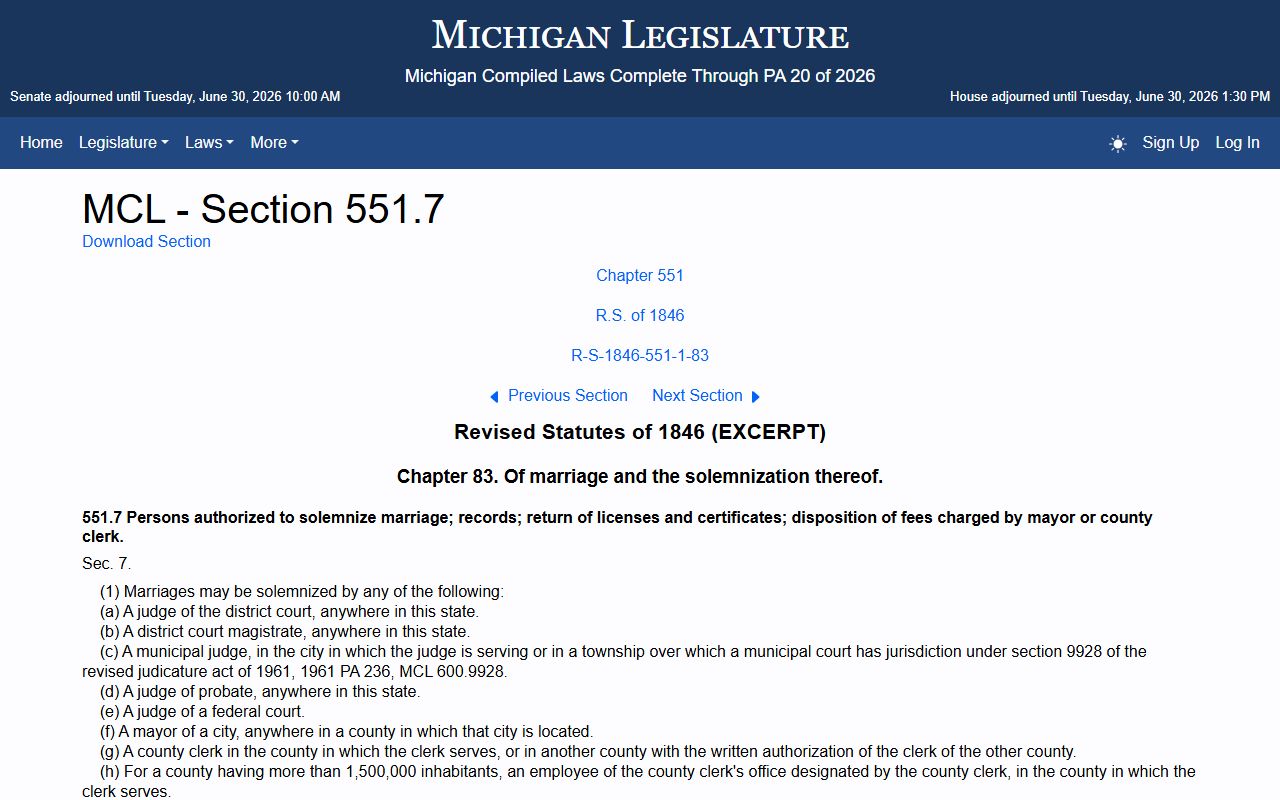
Because circuit judges are among the officials who may solemnize a marriage, the same court that hears a divorce can also join a couple. Family cases involving minors, protected identifying information, or safety concerns may carry limited-access restrictions. The Friend of the Court supports these cases with support accounting, mediation, and enforcement.
Note: Some family and juvenile documents are nonpublic under Michigan law, so ask the clerk or the Friend of the Court whether a specific record is open before you request it.
Michigan Trial Court Structure
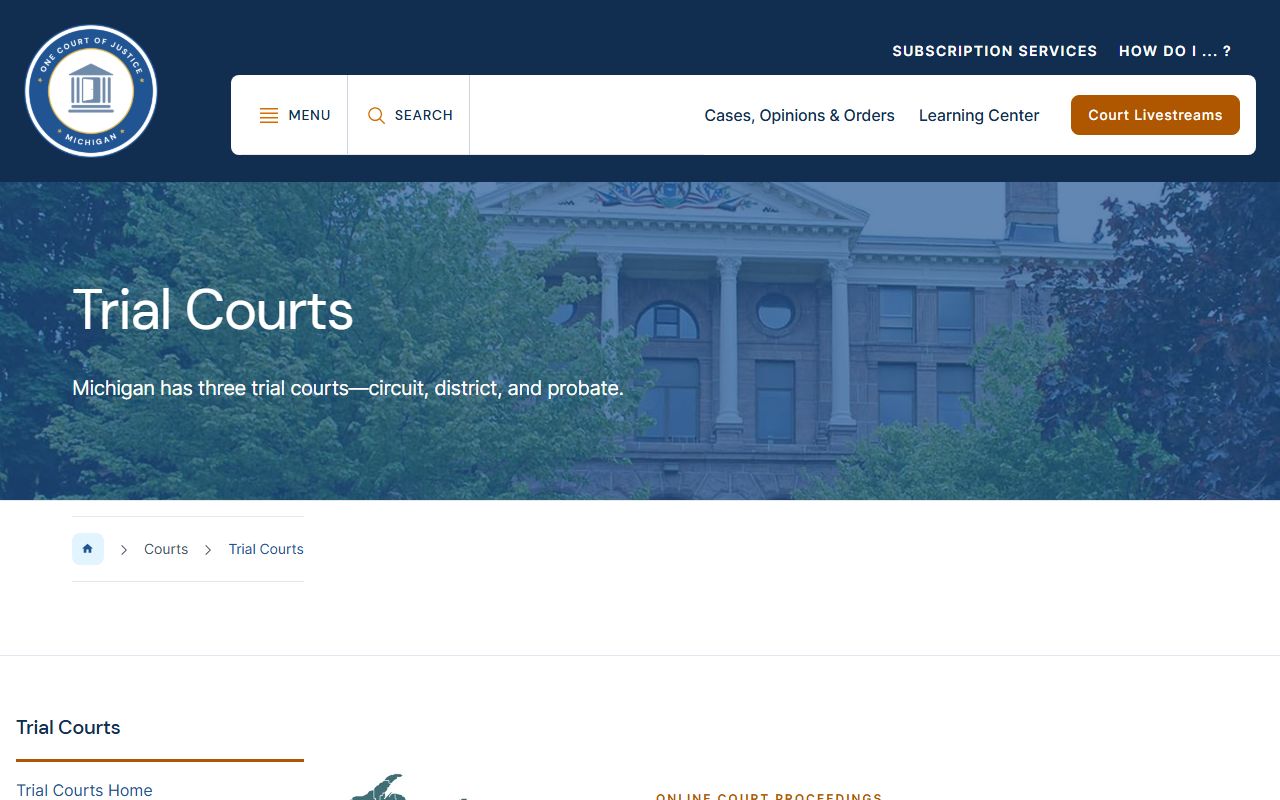
Michigan builds its trial system from three courts, and Osceola County has all three. The circuit court is the general jurisdiction court, the district court is the limited jurisdiction court, and the probate court handles estates and juvenile work. There are no Texas-style numbered district courts here, and no separate county court. Osceola shares its circuit, district, and probate courts with Mecosta County.
The statewide trial court reference lays out how circuit, district, and probate courts fit together across Michigan.
For docket-level checks, the state MiCOURT Case Search may show circuit, district, and probate cases depending on which court participates and the case type. When a case is not visible online, the fallback is the county clerk for circuit matters, the correct 77th District Court division clerk for district matters, and the Probate & Family Court staff for estate and juvenile files. To track hearing dates and scheduled events, each court keeps its own calendar of upcoming appearances.